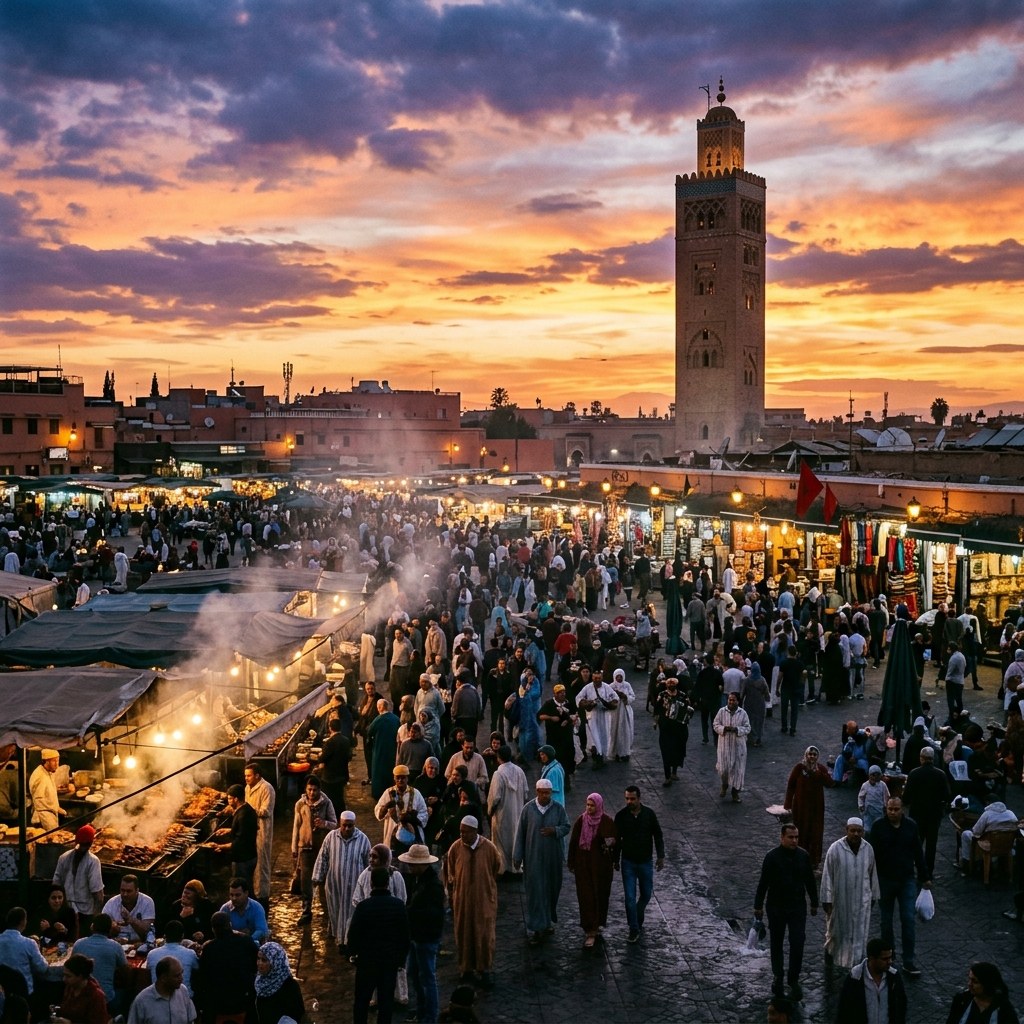
Bab Doukkala Marrakech is one of those places people walk through without realising they have walked through it. By ten in the morning, the gate is a traffic intersection, mopeds, hand-pulled carts, a man selling oranges from a wooden barrow, three taxis in a stand-off. By noon you cannot hear yourself think. But at five in the morning, before the muezzin and before the first donkey-cart, the gate belongs to nobody. That is the hour I want to write about.
My great-grandfather, Moulay Driss, walked through this gate every morning of his working life. He opened our kitchen door at five-twenty in 1946, and we have opened it at five-twenty more or less every morning since. The walk is short, eight minutes from the arch to our threshold, but it changes character with the light. This is what we see on the way in.
A gate that used to be a market
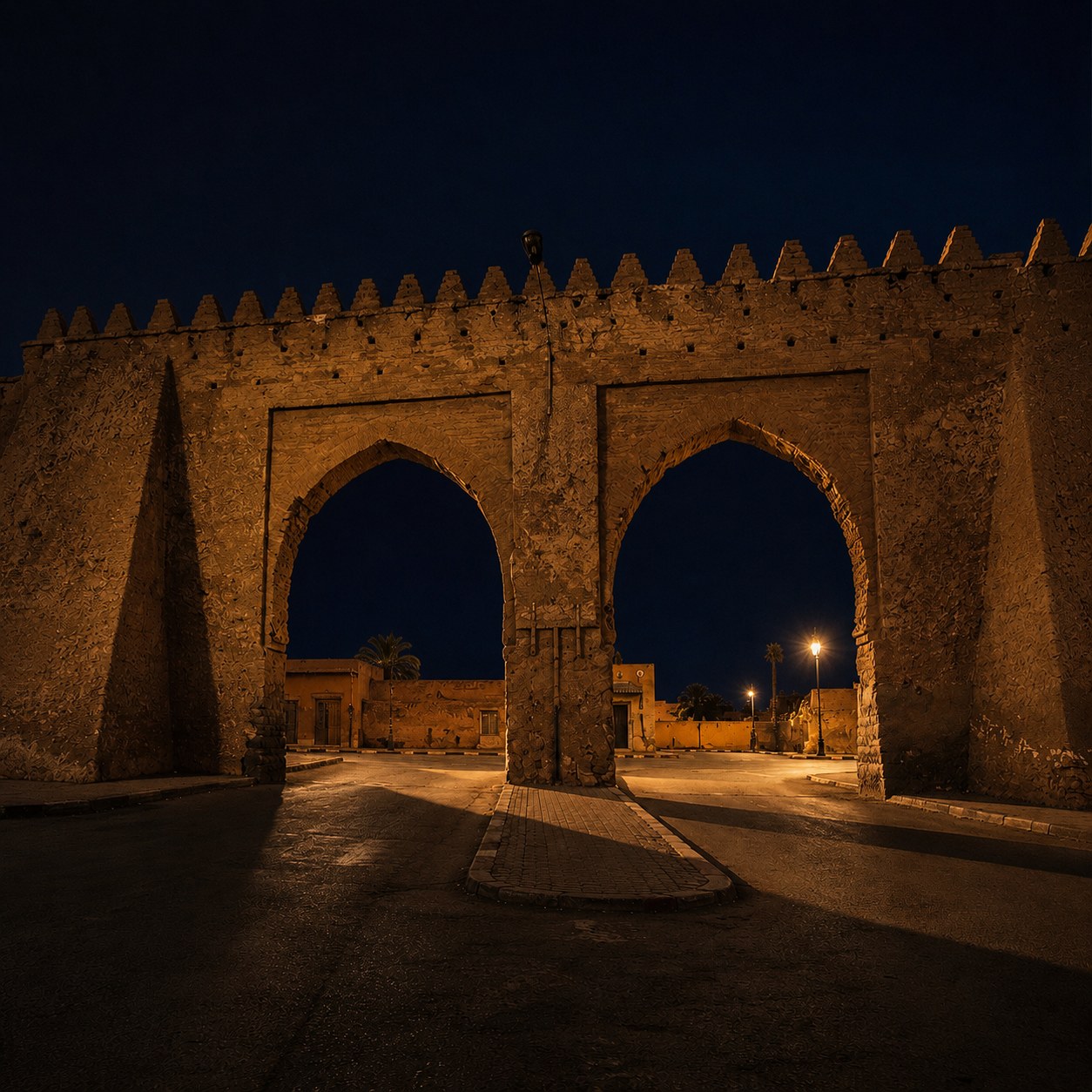
Bab Doukkala is one of the nineteen historic gates of the Marrakech medina. It faces northwest, toward the plain of the Doukkala tribes who gave it its name, and for a long stretch of the city's history it was the gate through which leather, spices, and salt entered the walled town. The traders unloaded outside the ramparts at dawn so the mules could rest before the heat, and the goods came in through the arch by hand. The street that runs from the gate to the Mouassine fountain still carries the muscle memory of that traffic, narrow, slightly downhill, easy to pull a cart along.
Our restaurant sits on a side-alley off that same street. There is no plaque. The door is the colour the door has always been, a deep, dusty red, and if you do not know what you are looking for you will walk past it. Most people do.
The mint arrives before the sun
The first delivery of the day is mint. It comes from the gardens around Tameslouht, half an hour outside the city, and it arrives in plastic crates stacked four high on the back of a small white van. The driver is named Hassan. He has been doing this run for nineteen years. He does not knock on doors, he leaves the crates in a doorway he knows is ours, and we collect them when we open. The mint is still wet. The leaves smell like crushed pepper and wet stone, and if you walk past the door at five-thirty you will catch it before anything else.
After the mint comes the oranges, in a wooden cart pulled by a man whose name I have somehow never learned. After the oranges, the bread, a teenager from the Mouassine bakery, half-asleep, balancing a wooden tray on his head with the fearless stupidity of seventeen. After the bread, the lamb. By six the alley is busy in a quiet, professional way. Nobody is shouting. Everyone has a job.
"You can tell a real Marrakech morning by the smell of the mint before the smell of the bread."
Khalid, on what wakes him up
The light on the ramparts
If you have ten minutes before the kitchen needs you, the thing to do is climb the small rise just outside the gate and look back. The ramparts of Marrakech are made of pisé, packed earth mixed with lime and straw, and at this hour they go through three colours in twenty minutes. They start dark, almost violet, when the sky is still indigo. Then they catch the first edge of the sun and turn the colour of weak tea. Then, suddenly and only for about ninety seconds, they glow the colour of a ripe apricot. By six-fifteen they are the ordinary pink-brown of every postcard. The apricot minute is the one to wait for.
You will not be alone up there. There is usually an old man with a small dog, and sometimes a tour guide rehearsing his English speech in private before the day begins. Nobody minds anybody.
Why this gate, and not another
Marrakech has more famous gates. Bab Agnaou, on the south side, is the one in the guidebooks, carved stone, enormous, photographed every two minutes. Bab er Robb, by the Saadian tombs, is the one tour buses stop at. Bab Doukkala has no monument-photo to offer. Its arch is plain, its surroundings are working, its traffic is alive. This is precisely why we love it. It is the gate that still does its job.
It is also the gate our family chose. Moulay Driss could have opened a restaurant anywhere in the medina in 1946. He chose this corner because the suppliers were here, the souk was here, and the rents were low. The suppliers are still here. The souk is still here. The rents are no longer low, but we are not moving.
How the dawn shapes the dinner
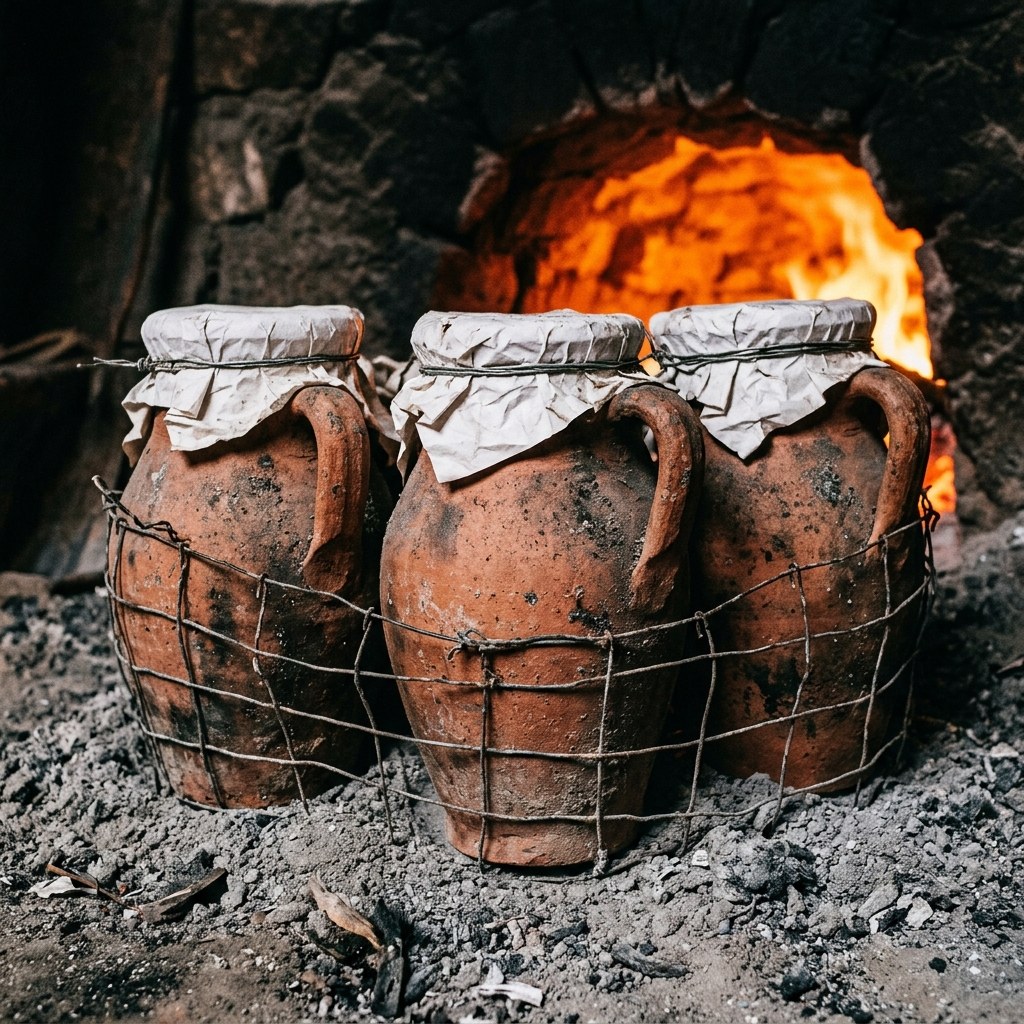
There is a direct line from the five-o'clock alley to the eight-o'clock terrace. The mint that arrived before sunrise is the mint that goes into your evening glass of tea. The lamb that came in at six is the lamb that has been in the tanjia jar since yesterday afternoon, slow-cooking under warm ash in the back of the kitchen. The oranges from the cart will be sliced thin, dressed with cinnamon and orange-flower water, and brought to your table at the end of the meal. None of it travelled far. None of it sat overnight in a cold room. This is the plain advantage of cooking in the same neighbourhood you buy from, the food has not had time to forget where it came from.
If you sit on our terrace tonight and order from the menu, the dish that arrives is, in some quiet way, a record of the morning that started it. The cool air outside the gate is in the mint. The apricot light is in the saffron. The man with the wooden cart is in the orange salad. We do not put any of that on a chalkboard, but it is there.
If you want to see it for yourself
You do not need to be a chef, a journalist, or up to anything in particular. Set an alarm for four-forty. Walk to Bab Doukkala. Stand under the arch for ten minutes. Wait for the mint van. Climb the rise outside the gate and watch the ramparts turn apricot. Walk back down through the gate as the muezzin starts. Then go back to your riad and sleep until lunch. The medina will look entirely different to you for the rest of your visit.
And if, that evening, you would like to taste what arrived in those crates, we hold a few tables on the terrace for guests who read this far. Ask for Youssef. I will tell you what came in that morning.