Six friends ask me this question every month, and the answer doesn't fit in a WhatsApp reply. So here it is in long form. I run the family restaurant in Bab Doukkala, my great-grandfather opened it in 1946, which means I've had a long time to listen to people argue about where to eat in Marrakech. I'll mention our place. I'll be honest about it. And I'll mention the others, the rooftops, the courtyards, the cafés, the souk corners, the way I'd brief a friend the night before they arrived.
A note before we start. There is no single best restaurant in Marrakech, and anyone who tells you otherwise is selling something. There is the right place for the night you're having: the courtyard for a slow first dinner, the rooftop for a friend's birthday, the souk corner for a one-dirham breakfast. This guide is organised that way. It is not a ranking. It is a map.
First, how to spot a tourist trap
Marrakech has a few hundred restaurants inside the medina walls. Maybe a fifth of them are honest. The rest will feed you, but they will charge you more than they should and serve you something a Marrakchi wouldn't recognise. Four tells, before you sit down:
- The host who chases you down the alley with a laminated photo menu in seven languages. Real restaurants don't recruit on the street. They have a door, and the door is usually quiet.
- The menu that includes "Moroccan pasta" or "tagine pizza." Tagine is not a topping. Couscous is not a side. If a menu can't decide what country it's in, leave.
- A waiter who can't tell you who cooks the food. In a real Moroccan kitchen, the cook has a name, and that name has been the cook for fifteen years. If your waiter shrugs, that's an answer.
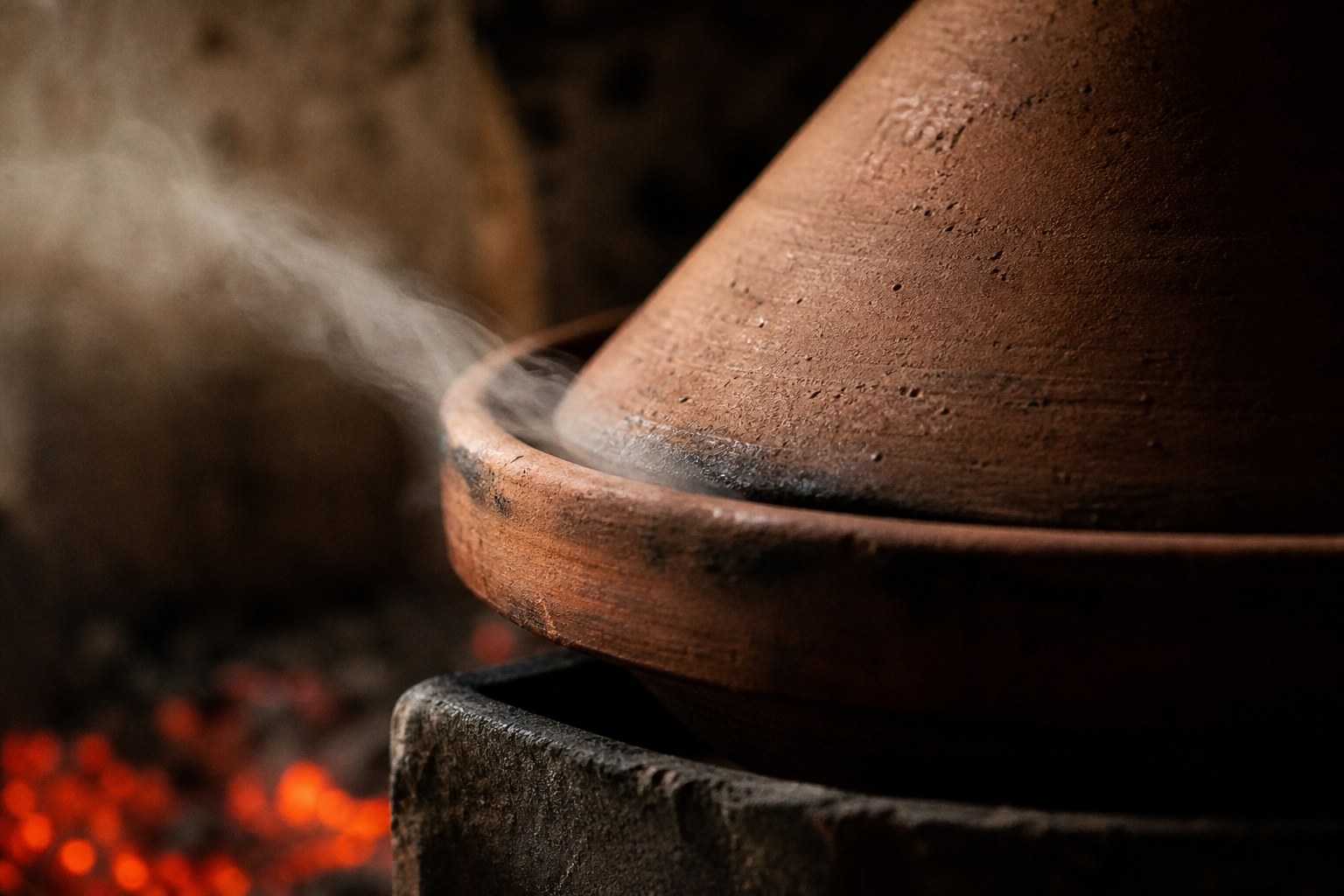
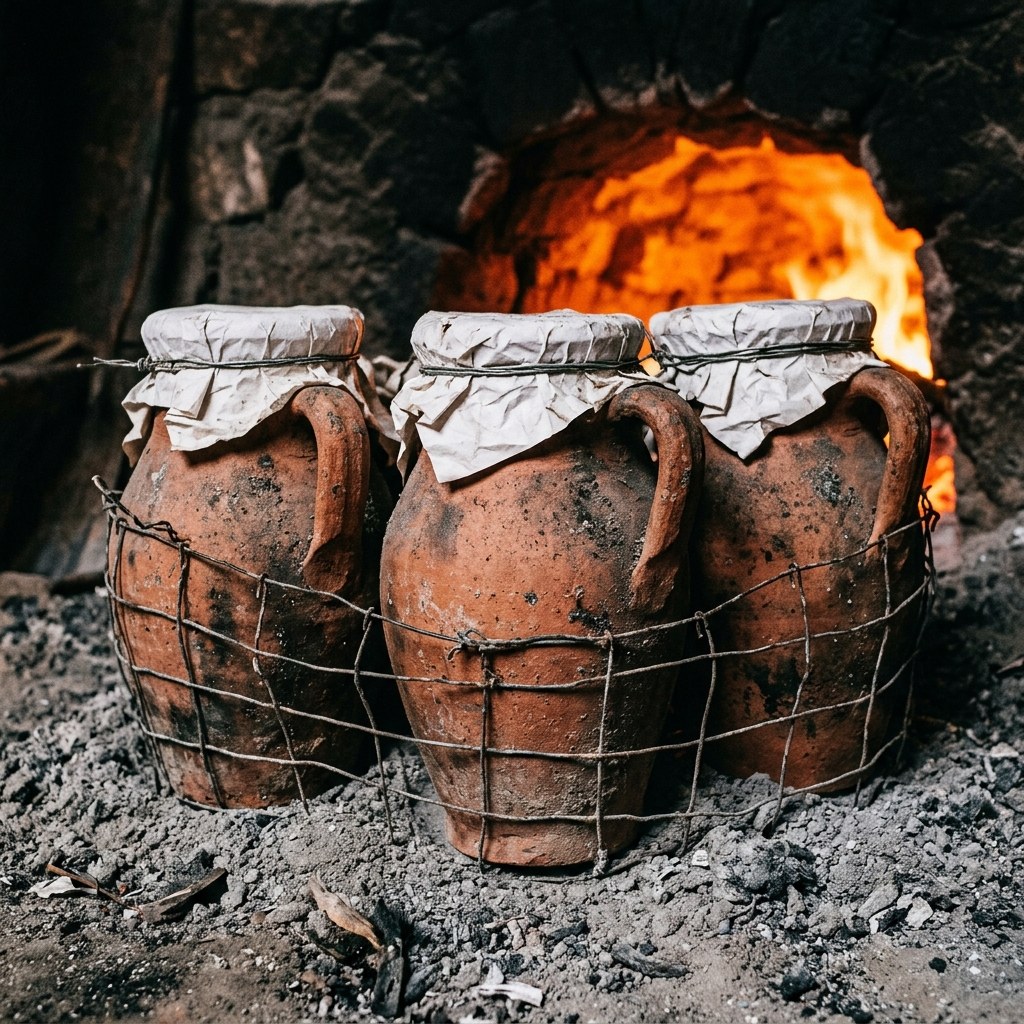
- A tagine that arrives in twelve minutes. A real tagine cooks for three hours minimum, on coal, untouched. Anything faster came from a microwave or a stockpot. We wrote a long piece about why, if you want the technical version.
None of this is meant to be unkind. Most of those tourist-facing places are run by people trying to feed their families in a city that, last year, hosted three million visitors. But you are reading this because you want the real version. The real version is below.
Le Vrai Traditionnel, Bab Doukkala (since 1946)
I'll get our restaurant out of the way first, so the rest of this piece can be honest about everyone else.
Le Vrai Traditionnel is a Moroccan rooftop in the medina, two streets in from Bab Doukkala. The kitchen is older than the airport. My great-grandfather, Moulay Driss, opened it in 1946; my grandmother cooked here through the 1970s; my father tore down a wall in 1989 to put in the rooftop, which the city told him he couldn't, and which everyone now agrees was the right move. We are eighty years in. The dining room downstairs is courtyard-cool in the afternoon. The rooftop opens at sunset and closes when the last guest leaves.
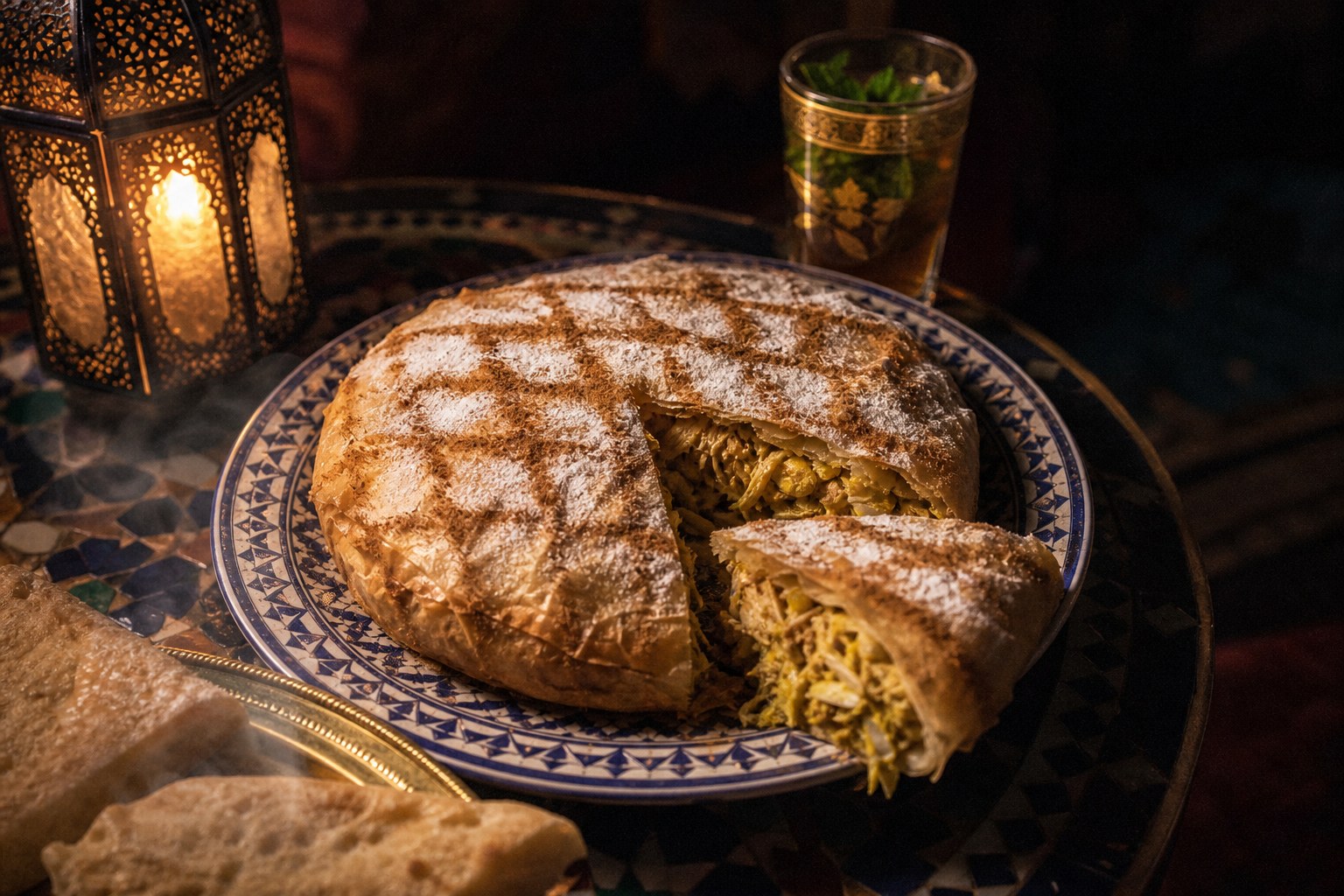
What we cook: slow tagines on coal, lamb with prunes, chicken with preserved lemon, beef with seven vegetables, couscous on Fridays, royal pastilla, hand-rolled briouats, mint tea poured properly. Most of it has been on the menu for the better part of a century. The full menu is here, with prices in dirham, and a note next to anything we've changed in the last twenty years (which is not much).

What I'd order if you came tomorrow: the lamb tagine with prunes, the briouat starter, and the mint tea (we pour it from height, the way Yamna does, there's a reason, and we'll explain it in another piece). Reservations are a good idea after 7 pm, our table form is here, two minutes. We hold a few seats every evening for guests who walk in late, but on a Friday night you'll wait.
For a real tagine, Nomad
Nomad sits on the edge of the spice square (Rahba Kedima) and does a contemporary, lighter take on Moroccan food. The rooftop is photogenic, the crowd is young, the menu has a few well-judged twists. Their tagine is real tagine, clay pot, real time. If you want capital-T Traditional cooking, ours is older and slower; if you want a polished, modern dinner with a great view of the medina rooftops, Nomad is fair.
For a courtyard dinner, Le Jardin & Café Clock
Le Jardin is a riad-style courtyard restaurant a short walk from Mouassine. It's pretty, green-painted shutters, banana palms, parrots somewhere on the upper level, and it photographs well, which is half its appeal. The food is fine. Not transcendent. Come for the courtyard at lunch, eat lightly, drink the lemonade.
Café Clock is the cross-cultural one, they do a camel burger that everyone tells you to try (it's good, actually), and they host storytelling evenings in Arabic, English, and French. Not strictly traditional, but warm, honest, and run by people who care. A good first night if you want to ease into Moroccan food rather than dive.
Both are fifteen-twenty minutes on foot from us. None of this is a competition; you should eat at all of them if you have the nights.
For a rooftop view, Kabana, Plus 61, and the question of sunset
Kabana is the modern medina rooftop, sunset cocktails, a DJ on weekends, a clean view across the rooftops to the Koutoubia. The food is acceptable; the bar is the point. Go at 6 pm in summer, ask for a seat on the west side, order something with gin.
Plus 61 is the Australian-Moroccan one near the Royal Theatre. Polished, slightly Sydney-ish in its plating, very good wine list, terrace upstairs. If you want a Moroccan dinner that feels like a dinner you'd have in a capital city, Plus 61 is the answer. (We are, deliberately, not that.)
Our own terrace is two streets from Kabana, eighty years older, and serves coal-cooked tagine instead of cocktails. We won't pretend to be neutral about which one you should choose. But if you want a contemporary rooftop and a sunset martini, Kabana is honest about what it is, and that counts for something. If you want the older terrace, we're here.
For mint tea, late
Atay Café is the late-night terrace near Jemaa el-Fna, four floors up, with a long view of the square at night. They serve tea and honey pastries until midnight. It's touristy, but it's the right kind of touristy, the kind where everyone is sitting quietly and looking at the same square, and you can hear the call to prayer from three different mosques at once.
A note about mint tea, if you've never had it served properly: it is poured from a height of about two feet, into a small glass, three times. The first pour is bitter, the second balanced, the third sweet. You drink all three. We serve it the same way; we wrote about why. Atay Café will pour it the same way too. A good test of any place in Marrakech is whether the tea is poured from height or out of the spout like a coffee.
For breakfast in the medina
Don't go to a restaurant. This is the most honest piece of advice in the article.
Walk to the souk before 9 am. There is a corner stall on the way to Bab Doukkala, you'll smell it before you see it, that sells beghrir (semolina pancakes, honeycomb texture, eaten hot with honey and butter) and msemen (a folded, flaky flatbread, also with honey, also unreasonably good). One dirham fifty, maybe two. Eat them standing. Then walk on.
If you want orange juice, the stalls at Jemaa el-Fna are fine but the prices have climbed. The best juice is from a small cart on the side street north of the square; ask anyone for "le jus d'oranges qui n'est pas sur la place." They will know.
For a longer write-up on the medina at dawn, the bakers, the butchers, the carts, the rhythm of a market that's been running for a thousand years, we have a piece on Bab Doukkala before the city wakes up.
A note on prices, reservations, and what to expect
Prices. A real Moroccan dinner inside the medina runs roughly 150–350 MAD per person (£12–£28; €15–€35). That includes a starter, a tagine or couscous, mint tea, and dessert. Anywhere charging significantly more is charging for the room, not the food. Anywhere charging significantly less is cutting corners, usually on the tagine itself.
Reservations. For dinner after 7 pm in high season (March–May, September–November), book ahead. Most medina restaurants take reservations by WhatsApp; the one or two famous places will require a deposit. Lunch is almost always walk-in.
Tipping. Service is rarely included. 10% is generous; 5% is fine; rounding up is acceptable. Cash, in dirham, in the leather folder.
Vegetarian and vegan. Most Moroccan kitchens, including ours, will happily serve you a tagine without meat, vegetable, with seven vegetables and a little smen, is one of the oldest dishes in the canon. Vegan is harder (smen is butter); ask. Most places will adapt.
Alcohol. Many medina restaurants don't serve it for cultural reasons. Many do. The rooftop bars (Kabana, Plus 61, Nomad's bar) all do; the older traditional houses sometimes do, sometimes don't. Le Vrai Traditionnel serves no alcohol — only alcohol-free beer and cocktails. If a glass of wine is part of your evening, that's another address.
"There is no single best restaurant in Marrakech. There is the right place for the night you're having."
the only line in this piece I'd put on a t-shirt
If you only have one dinner in Marrakech
Come to ours. I'll be honest, that is what the rest of this article has been working towards. Eighty years of cooking on coal, three generations in one kitchen, a rooftop the city told us we couldn't have, and a lamb tagine that has been on the same fire since five-twenty in the morning. Reservations are here. We hold a few seats every evening for guests who read this far.
If you have two dinners, save us for the second. Have your first night at Café Clock, ease into the food, walk back through the souk slowly. Come to us on the second night, hungry, and stay for the mint tea.
If you have three or more, you don't need this article. You'll find your own places. That's the best version of being in Marrakech anyway, the one where the city stops being a list and starts being a set of streets you know by heart. We hope one of them ends at our door.