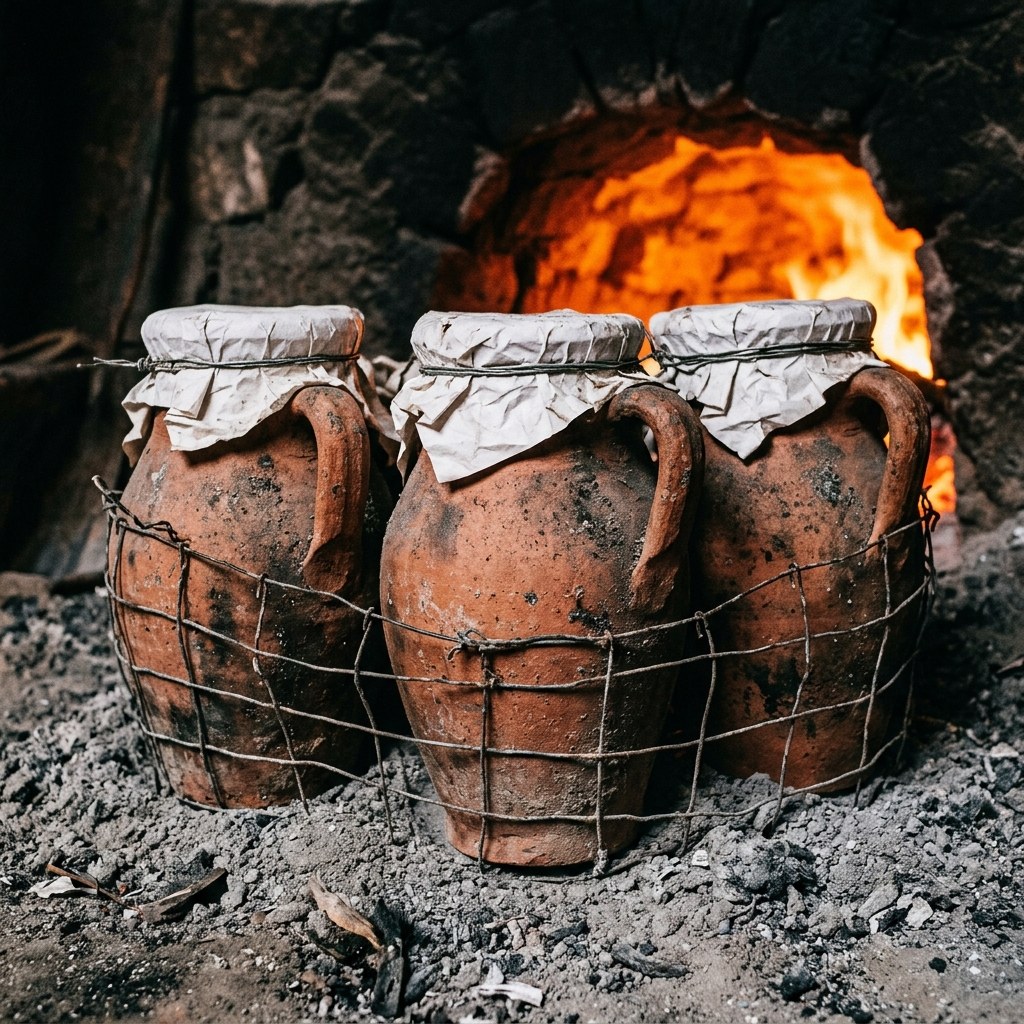
Brahim arrives at the kitchen door at five-twenty in the morning. He is sixty-eight years old, he is wearing the same blue cotton jacket he has worn for fifteen years, and he is carrying a small leather pouch of charcoal that he buys from the same supplier his uncle used in 1974. He says good morning to no one in particular. He puts on the kettle, takes off his jacket, and lights the first kanoun of the day before any of us have finished our coffee.
It will be three hours before he opens a single tagine.
If you ask Brahim why he still cooks on coal, why, in 2026, in a kitchen that is more than capable of running a sixteen-burner gas range, he insists on a clay brazier the size of a saucepan to make a slow Moroccan tagine, he will not give you an answer that fits easily in a sentence. He will pause, look at the kanoun, and ask if you have time. If you say yes, he will pour you tea and start somewhere unexpected: with the shape of the lid.
The cone is an argument
A tagine, properly speaking, is two objects: a shallow round dish, and a tall conical lid that sits on top of it. It is the lid that does the work. Most people, watching a tagine cook for the first time, assume it is a sort of rustic dome, a way to keep the food warm, perhaps, or to honour an old tradition. It is neither. The cone is a piece of engineering.
Heat from the coal rises into the dish, the moisture from the meat and vegetables turns to steam, and the steam climbs into the cone. Up there, in the narrowest part of the lid, it cools. It condenses on the inner clay wall. And then, slowly, with the patience of geology, it slides back down to baste the food again. A single tagine of lamb with prunes will do this perhaps eight hundred times in the course of an afternoon.
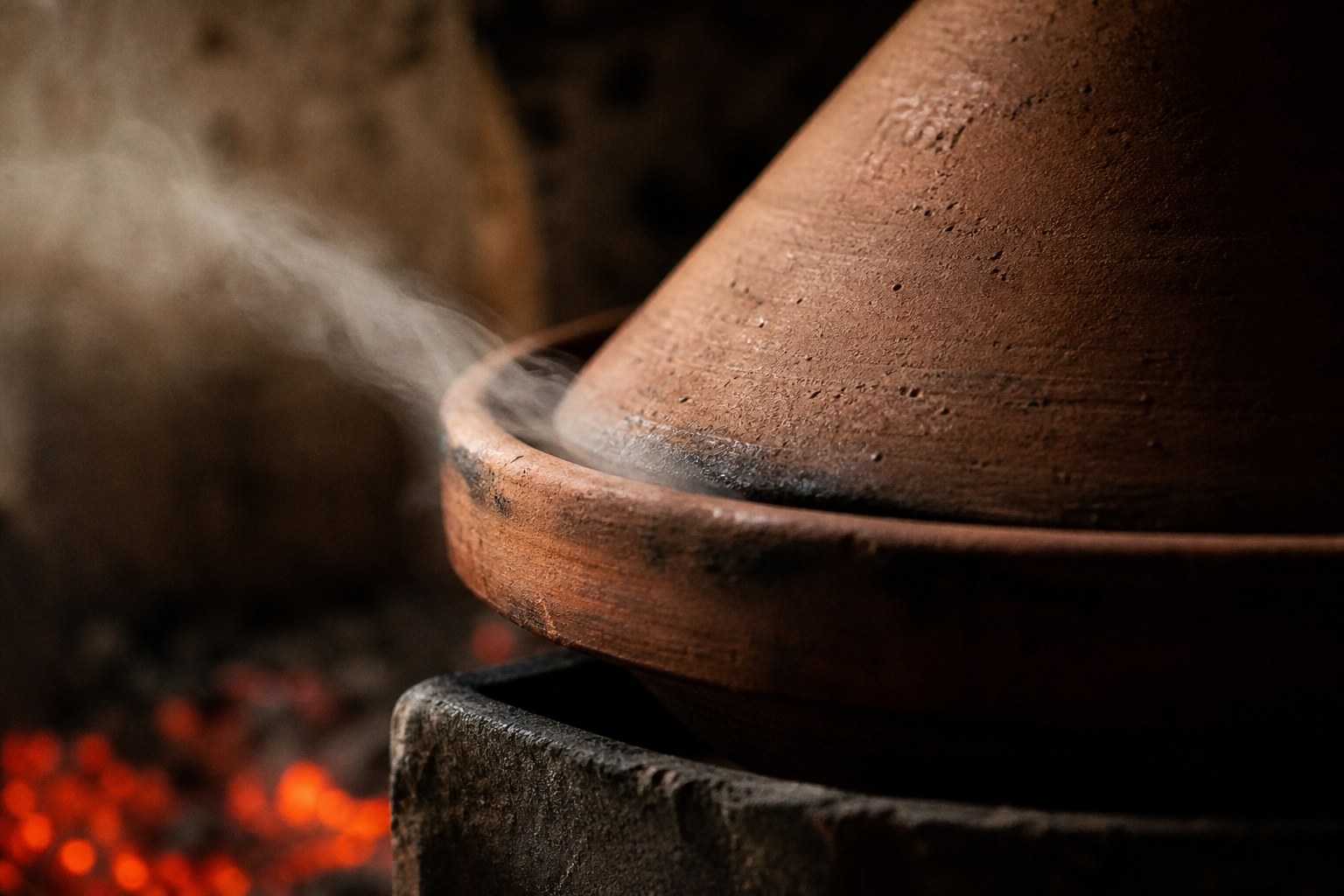
There is no liquid added to a properly built tagine. None. The meat braises in its own returning weather. This is why the dish tastes the way it does, concentrated, slightly sweet, faintly sticky on the lip of the spoon. It is also why it cannot be hurried. A pressure cooker will give you tender lamb in twenty minutes. It will not give you a tagine. (For the cousin that cooks even slower, overnight, in warm ash, in a clay urn, see our notes on tanjia.)
"The cone is the second cook. You are only the first."
Brahim, on whether he has ever owned a meat thermometer
Why coal, and not gas
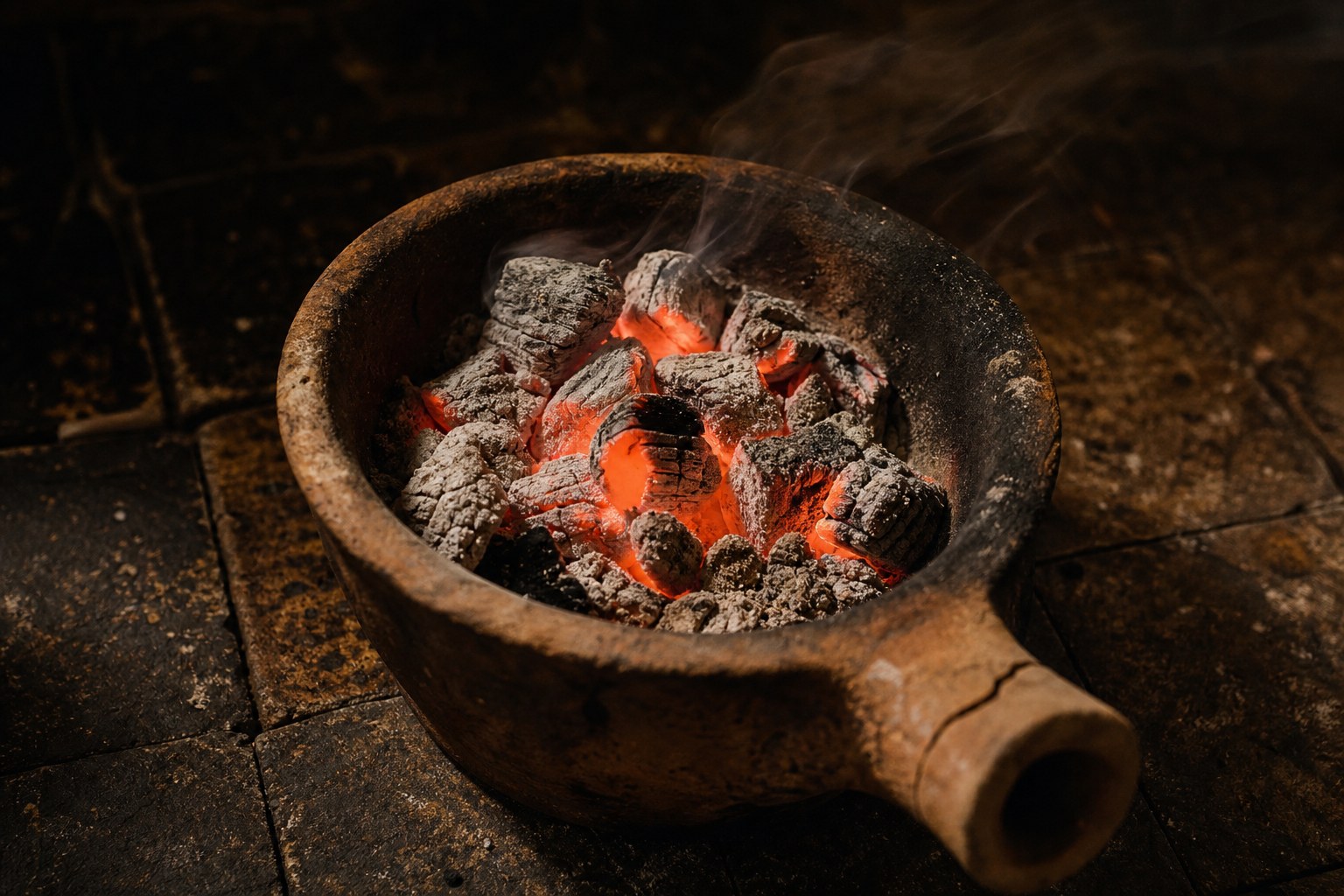
If the cone is the second cook, the kanoun is the first. A kanoun is a small, low brazier, a clay vessel filled with hardwood charcoal, lit perhaps an hour before the dish goes on. Its heat is gentle, uneven, and alive. It rises and falls with the breeze through the kitchen window. It demands attention. You move the tagine an inch to the left because one side is running too hot. You add a single piece of charcoal because the lamb is taking longer than you thought.
A gas burner, by contrast, will give you exactly the temperature you ask of it, exactly as long as you ask it. This sounds like an advantage. It is, in our kitchen, a problem.
The clay of the tagine itself is porous. It breathes. With coal, the heat is so low and so slow that the clay is allowed to do its part, absorbing some of the moisture, exchanging it back, softening the meat in a way that no metal pot will ever quite reproduce. Push the heat too high, and the clay cracks. Push it too low, and nothing happens at all. The trick is to live in the small window in between, for hours, the way Brahim does without thinking about it.
The thousand mornings
"You can't write down how to cook a tagine," Brahim told me on the third morning. He was, at that moment, lifting the lid a fraction of an inch, not to look, but to listen. There is a sound a tagine makes, somewhere between a whisper and a sigh, when the meat is ready. He cannot describe it. He says you only learn it by being wrong about it for a few thousand mornings.
This is the part that is hardest to translate, and it is the part of the dish that matters most. The tagine is not a recipe. It is a habit. It is a thirty-year conversation between a person, a piece of clay, a small fire, and a piece of meat that was alive yesterday. Recipes are useful, the way maps are useful, but no one has ever loved a map.
"You only learn it by being wrong about it for a few thousand mornings."
Brahim, on listening to a tagine
Our family has been cooking on coal in this kitchen since 1946. My great-grandfather, Moulay Driss, did not own a stove until 1958, and he sold it within a month. There is a story, I have not verified it, that he sold it to a French engineer who lived two doors down, who used it for exactly one chicken before bringing it back. I would like to believe the story is true. It would be very like him. The same patience runs through our Friday couscous and our pastilla, different dishes, same attitude toward the clock.
What you'll taste, if you sit down with us tonight
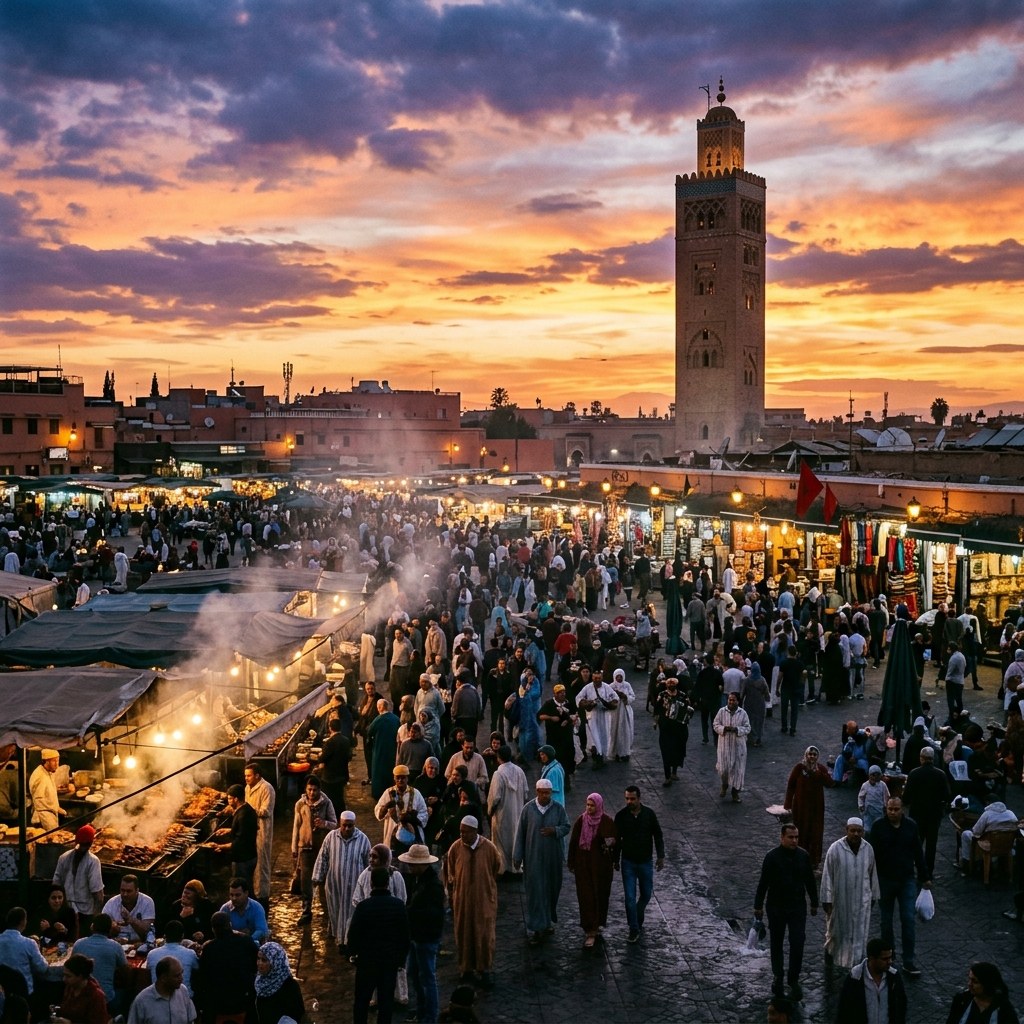
If you eat a slow-cooked Moroccan tagine at Le Vrai Traditionnel this evening, see the full menu here, or reserve a table if you'd like to watch one come out of the lid, here is what you are eating. You are eating something that was put on a fire eleven hours ago. You are eating something that has cooked itself in its own breath, eight hundred times over. You are eating clay, in a way, the porous taste of the vessel, the slight smokiness of the coal, the patience of a man who has not used gas since the year his daughter was born. You are eating the medina, on a Tuesday morning in April, at five-twenty.
It will not arrive in twenty minutes. We are sorry about this, and we are not sorry about this.